



Black Palm Cockatoo – Hand-Raised & DNA-Tested
Original price was: $9,000.00.$7,500.00Current price is: $7,500.00.
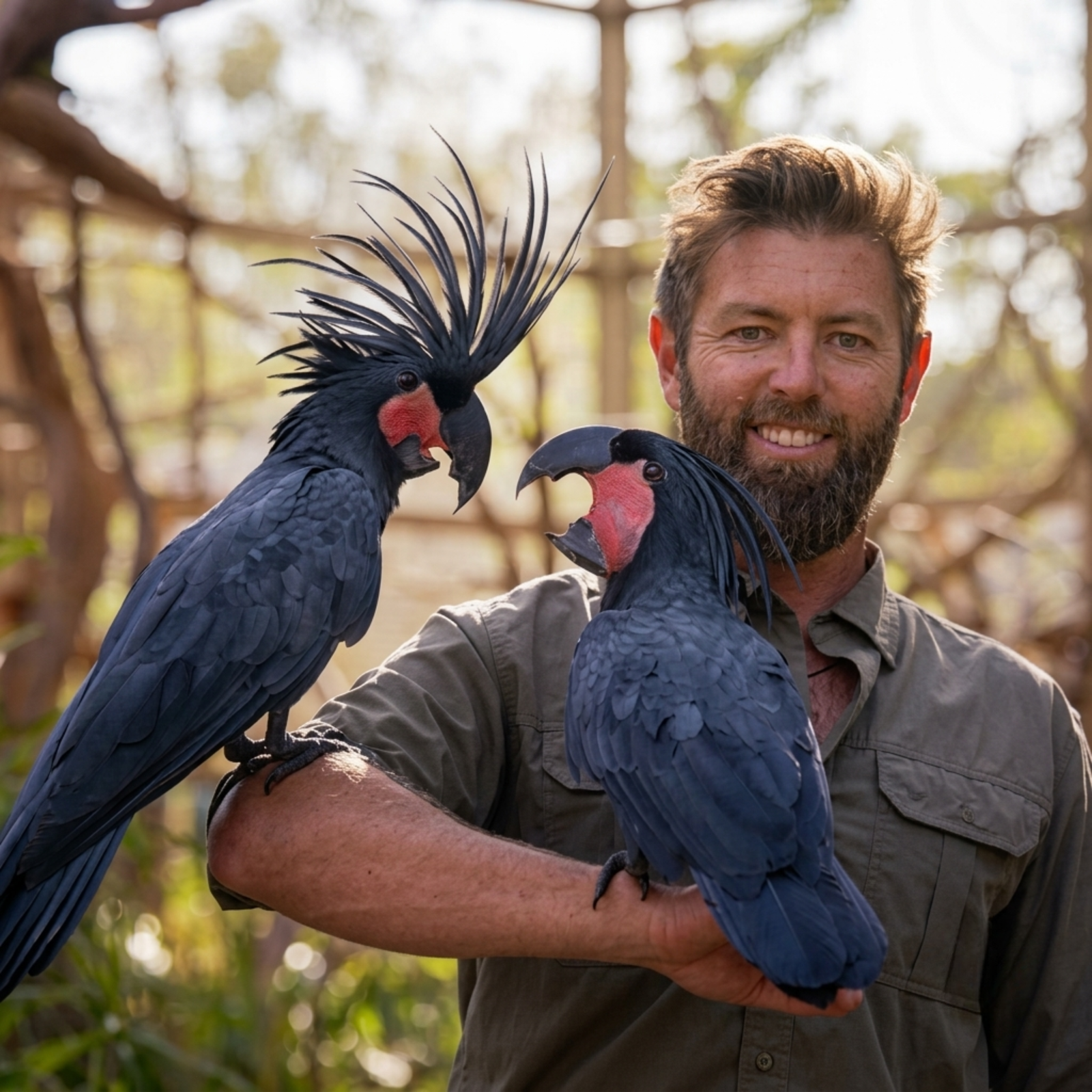
Hand-raised, DNA-sexed, and health-checked, this black palm cockatoo for sale is one of the rarest and most striking parrots in the world. Famous for its towering crest, massive beak, and bright red cheek patches, it bonds deeply with experienced keepers ready for a decades-long companion. Every bird ships safely across the USA and Canada with captive-bred and CITES documentation, backed by our Live Animal Guarantee. Reserve yours or join the waitlist today.
🛡️
Refund or replacement if there’s ever an issue
🧬
Lab-verified parentage and species
🩺
Examined before every bird ships
📜
Legally sourced and documented
⭐
Real feedback from past buyers
🔒
Safe, encrypted payment every time
Looking for a black palm cockatoo for sale from a breeder you can trust? You are in the right place. The black palm cockatoo (Probosciger aterrimus), also called the goliath cockatoo or great black cockatoo, is the largest cockatoo in the world and one of the most sought-after parrots on the planet. At Birds Jungle, every black palm cockatoo we offer is captive-bred, hand-raised, DNA-sexed, and health-checked before it ever leaves for a new home.
This is not an impulse pet. A black palm cockatoo is a decades-long companion with a big personality, a powerful beak, and needs that go well beyond those of a standard parrot. On this page you will find honest pricing, US legal facts, full care details, and a clear buying process, so you can decide with confidence whether this rare bird is right for you.
Ready to reserve or want current availability? Visit the Birds Jungle homepage or browse our full parrots for sale collection. Every bird ships safely across the USA and Canada, backed by our Live Animal Guarantee.
Black Palm Cockatoo Quick Facts
| Trait | Detail |
|---|---|
| Scientific name | Probosciger aterrimus |
| Other names | Goliath cockatoo, great black cockatoo, palm cockatoo, black macaw (informal) |
| Size | 22 to 24 inches (55 to 60 cm), tail included |
| Weight | 2 to 2.6 lbs (910 to 1,200 g) |
| Lifespan | 40 to 60 years, some reach 80+ with excellent care |
| Typical US price | About $16,000 to $25,000 (rare or proven birds cost more) |
| Talking ability | Limited but capable of a few clear words and sounds |
| Noise level | Very loud, not suited to apartments |
| Experience level | Advanced keepers only |
| Legal status (US) | Legal to own when captive-bred, CITES Appendix I listed |
What Is a Black Palm Cockatoo?
The black palm cockatoo is a large parrot with smoky gray to jet-black feathers, and it belongs to the cockatoo family. It is unique enough to sit in its own genus, Probosciger, which means it has no close cockatoo relatives. It is also the only cockatoo species that lives in tropical rainforest. That rarity, both in the wild and in captivity, is a big reason this bird is so special and so expensive.
People often call it the goliath cockatoo because of its size. It is widely regarded as the largest cockatoo species and one of the largest parrots in the world. When you stand next to one, the crest, the huge beak, and the deep charcoal feathers make an unforgettable impression.
How to Recognize a Black Palm Cockatoo
A few features make this species easy to identify:
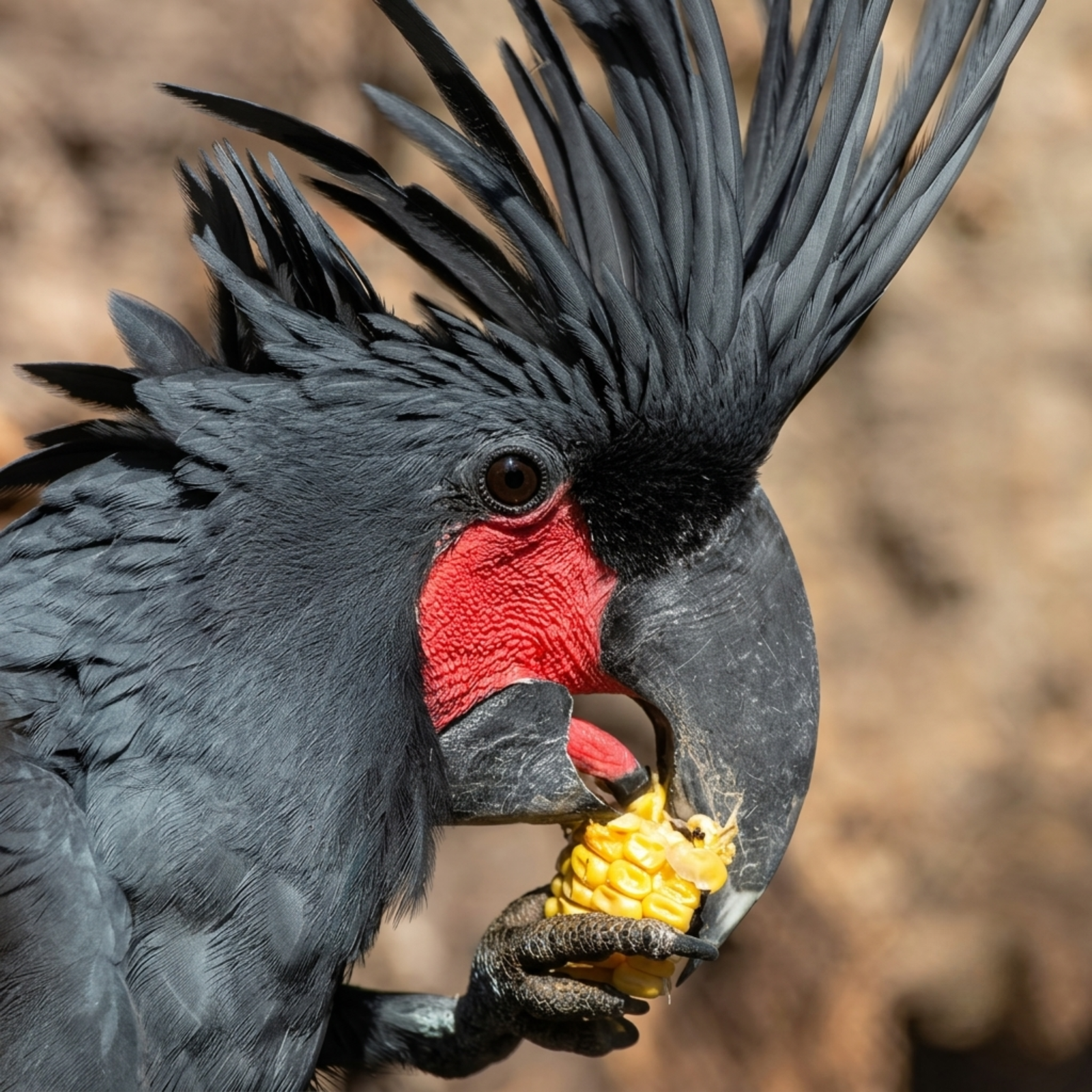
- Massive beak. It has one of the largest bills of any parrot. Only the hyacinth macaw has a bigger one. The upper and lower parts of the beak do not meet along much of their length, so the bird can hold a nut against the top of its beak with its tongue while the lower part cracks it open.
- Tall crest. A long, wispy crest rises and lowers with the bird’s mood.
- Red cheek patches. Bright red bare skin on each cheek flushes deeper red when the bird is excited, alarmed, or active. This color change is rare among parrots.
- Charcoal plumage. Feathers look black but carry a fine gray powder, giving a soft slate sheen in sunlight.
Young birds look slightly different. Chicks under about 18 months often show pale yellow barring under the feathers, a paler beak tip, and a pale ring around the eye. Males also tend to have a noticeably larger beak than females, which is why DNA sexing matters when you buy.
Where Black Palm Cockatoos Come From
In the wild, black palm cockatoos live in New Guinea (both Papua New Guinea and Indonesian Papua), the Aru Islands, and the very tip of Cape York Peninsula in far northern Queensland, Australia. They favor rainforest, woodland, and wooded savanna, and they nest in hollows in tall trees. Australia protects its population strictly, so essentially every black palm cockatoo legally available in the US is captive-bred, not wild-caught.
How Much Does a Black Palm Cockatoo Cost?
In the United States, a black palm cockatoo for sale usually costs about $16,000 to $25,000. Rare, older, hand-tamed, or proven breeding birds can run higher, sometimes $30,000 to $40,000. Independent price guides put the palm cockatoo among the most expensive parrots in the world, and most sources agree the typical range starts around $16,000.
Because availability is so limited, Birds Jungle prices each black palm cockatoo individually based on age, sex, tameness, and current supply. We keep pricing transparent and never inflate it. For a firm quote and up-to-date availability, contact our team or ask to join the waitlist for the next available bird.
Why Black Palm Cockatoos Are So Expensive
The price comes down to simple supply and demand. Black palm cockatoos are one of the hardest parrots to breed in captivity. In the wild, a pair usually raises just one chick every two years, one of the lowest reproduction rates of any parrot. Breeding pairs are rare, chicks are few, and demand from serious collectors stays high. Add years of hand-rearing, health testing, and permits, and the cost adds up fast.
The True Cost of Owning One
The purchase price is only the start. Plan for the full cost of ownership before you buy. Over this bird’s long life, the ongoing spend often matches or beats the purchase price.
| Ongoing cost | Typical estimate (USD) |
|---|---|
| Large aviary or cage | $1,500 to $5,000+ (stainless steel, extra-strong bars) |
| Annual food | $800 to $1,500 (nuts, palm nuts, pellets, fresh produce) |
| Routine avian vet care | $300 to $800 per year, plus emergencies |
| Enrichment and toys | $400 to $1,000 per year (destructible, replaced often) |
| Setup extras | Play stands, feeders, travel carrier, scale |
A strong, spacious enclosure is not optional for a bird with this beak. Browse heavy duty bird cages built for large parrots, and remember that bigger is always better for a palm cockatoo.
Is It Legal to Own a Black Palm Cockatoo in the US?
Yes. It is legal to own a captive-bred black palm cockatoo in the United States. The species is not listed under the US Endangered Species Act and has no special status under the Migratory Bird Treaty Act. What makes it different from a common pet parrot is CITES.
The black palm cockatoo is listed on Appendix I of CITES, the international agreement that controls trade in protected species. It was moved from Appendix II to Appendix I in 1987. In plain terms, this means commercial international trade of wild birds is banned, and any cross-border movement requires strict permits. Captive-bred birds sold within the US are legal, but paperwork matters.
If you buy a black palm cockatoo, keep this documentation on file:
- Proof of captive breeding and any CITES paperwork the breeder provides.
- A bill of sale showing the seller, date, and price.
- Band or microchip records that identify the individual bird.
- Health and DNA certificates from a licensed avian vet.
State and city rules can add extra requirements, such as permits or ownership limits on large exotic birds. Always confirm the rules where you live before you buy. Every Birds Jungle black palm cockatoo comes with the correct captive-bred and health documentation, so you own your bird with full peace of mind.
Are Black Palm Cockatoos Endangered?
On the global IUCN Red List, the black palm cockatoo is currently listed as Least Concern, mainly because it has a very large range. That said, the population trend is declining. Habitat loss from mining and logging, altered fire patterns, slow breeding, and illegal capture all put pressure on wild numbers. Australia takes this seriously and lists its population as Vulnerable under national law.
This is exactly why responsible sourcing is so important. Birds Jungle only sells captive-bred black palm cockatoos raised in aviculture. We never sell wild-caught birds. Buying captive-bred supports ethical keeping, protects wild populations, and gives you a healthier, better-socialized bird that is used to people from day one.
What to Expect as a Black Palm Cockatoo Owner
Owning this bird is rewarding but demanding. Here is an honest look at daily life with a black palm cockatoo.
Housing and Space
Give a black palm cockatoo the biggest enclosure you can. A large indoor cage is a minimum, and a walk-in aviary is ideal. Use stainless steel with thick bars, because a lighter cage will not survive this beak. The bird needs room to climb, stretch its wings fully, and move around, plus safe out-of-cage time every day.
Diet and Nutrition
In the wild, black palm cockatoos eat hard nuts, seeds, palm fruits, and buds. In your home, build the diet around a quality pellet made for large parrots, then add nuts in the shell, palm nuts, fresh vegetables, and some fruit. The nuts in the shell are not just food. Cracking them keeps that huge beak busy and healthy. Always provide fresh water and avoid salty, sugary, or fatty human snacks.
Intelligence, Drumming, and Enrichment
Black palm cockatoos are famously smart and are one of the very few animals known to use tools. In the wild, males break a stick or use a seed pod as a drumstick and beat it against a hollow tree in a rhythmic display. Research published in the journal Science Advances in 2017 by Heinsohn and colleagues found that each male even drums with its own individual rhythm, almost like a personal signature.
That intelligence needs an outlet at home. Give your bird plenty of destructible toys, foraging puzzles, branches to chew, and daily interaction. A bored palm cockatoo can become stressed, loud, or prone to feather problems, so enrichment is a core part of care, not an extra.
Noise and Temperament
Be honest with yourself about noise. Black palm cockatoos are loud, with strong calls and even a foot-stomping display when excited. They are not a good fit for apartments or close neighbors. With daily attention they are affectionate, playful, and deeply bonded to their people. Without it, they can turn moody or territorial. This is a bird for someone with time, patience, and space.
Lifespan and Long-Term Commitment
Plan for the long haul. Black palm cockatoos commonly live 40 to 60 years, and some individuals have reached 80 years or more with excellent care. A young bird could easily be with you for the rest of your life, and many owners include their bird in estate or care plans. Buying one is a lifetime promise, not a passing purchase.
Black Palm Cockatoo vs Other Large Parrots
Not sure the black palm cockatoo is the right match? Here is how it compares to three other popular large parrots on the points that matter most before you commit.
| Species | Typical US price | Size | Lifespan | Noise | Best for |
|---|---|---|---|---|---|
| Black palm cockatoo | $16,000 to $25,000+ | 22 to 24 in | 40 to 60 yrs | Very loud | Expert keepers |
| Hyacinth macaw | $10,000 to $20,000 | About 40 in | 50+ yrs | Very loud | Expert keepers |
| Moluccan cockatoo | $1,000 to $3,000 | About 20 in | 60+ yrs | Extremely loud | Experienced owners |
| African Grey parrot | $2,500 to $8,000 | 12 to 14 in | 40 to 60 yrs | Moderate | Intermediate owners |
If a first big parrot feels more realistic, our African Grey parrots and macaws are excellent, more manageable starting points.
Who Should Own a Black Palm Cockatoo?
A black palm cockatoo is a great match if you:
- Already have experience with large parrots or cockatoos.
- Can give the bird several hours of attention every day.
- Have space for a large aviary and can handle a loud bird.
- Are ready for a 40 to 60 year commitment and the cost that comes with it.
It is probably not the right bird if you are a first-time owner, live in an apartment, travel constantly, or want a quiet, low-maintenance pet. If that sounds like you, do not worry. Our team is happy to help you find a better-matched species.
What’s Included With Your Birds Jungle Black Palm Cockatoo
When you buy a black palm cockatoo from Birds Jungle, you get more than a bird. You get a fully supported, ready-to-bond companion:
- Hand-raised and socialized from a young age, so it is calm and used to people.
- DNA sexing so you know for certain whether your bird is male or female.
- Avian vet health check and a health certificate before travel.
- Captive-bred and CITES documentation for legal ownership.
- Live Animal Guarantee for safe arrival, in line with our live animal policy.
- Safe nationwide shipping across the USA and Canada.
- Lifetime breeder support for diet, housing, and care questions.
How to Buy or Reserve a Black Palm Cockatoo
Because these birds are so rare, most are placed through reservation and a waitlist. Here is how it works at Birds Jungle:
- Contact our team to ask about current availability and pricing.
- Tell us about your experience, home, and schedule so we can confirm a good match.
- Reserve your bird with a deposit, or join the waitlist for the next chick.
- We arrange a safe travel plan and share health and DNA paperwork.
- Your black palm cockatoo ships to you, backed by our Live Animal Guarantee.
How to Spot a Healthy Bird and Avoid Scams
The black palm cockatoo market attracts scammers because the birds are valuable and hard to find. Protect yourself with these checks:
- Ask for live proof. Request current photos or a live video of the actual bird, not stock images.
- Demand paperwork. A real breeder provides DNA results, a vet health certificate, and captive-bred documentation.
- Be wary of low prices. A black palm cockatoo priced far below $16,000 is a major red flag.
- Avoid wire-only sellers. Pressure to pay by untraceable methods with no traceable business is a classic scam sign.
- Check for real support. Trusted sellers answer questions, share their process, and stand behind the bird after the sale.
Birds Jungle meets every one of these standards. We are a real exotic bird business focused on the USA and Canada, run by keepers who raise their own birds, and we are glad to answer your questions before you commit.
Frequently Asked Questions
How much does a black palm cockatoo cost?
In the US, a black palm cockatoo usually costs about $16,000 to $25,000. Rare, older, or proven breeding birds can reach $30,000 to $40,000. This makes it one of the most expensive parrots in the world.
Is it legal to own a black palm cockatoo in the US?
Yes. Captive-bred black palm cockatoos are legal to own in the US. The bird is not listed under the Endangered Species Act, but it is CITES Appendix I, so keep your captive-bred paperwork, DNA, and health records, and check your state and city rules.
Do black palm cockatoos make good pets?
They can, for the right owner. They are intelligent, affectionate, and playful, but also loud, powerful, and demanding. They suit experienced keepers with time, space, and a long-term commitment, not first-time bird owners.
Are black palm cockatoos endangered?
The IUCN currently lists the species as Least Concern globally, though its wild population is declining from habitat loss, slow breeding, and illegal capture. Australia lists its population as Vulnerable. Buying captive-bred birds helps protect wild ones.
How long do black palm cockatoos live?
Black palm cockatoos commonly live 40 to 60 years, and some individuals reach 80 years or more with excellent care. Owning one is a lifetime commitment.
Can black palm cockatoos talk?
They can learn a few clear words and sounds, but they are not among the strongest talkers like the African Grey. Most owners value them for their personality, intelligence, and striking looks rather than heavy talking.
What do black palm cockatoos eat?
They eat a mix of large parrot pellets, nuts in the shell, palm nuts, seeds, fresh vegetables, and some fruit. Nuts in the shell also give that powerful beak healthy work to do. Avoid salty, sugary, and fatty human foods.
Why are black palm cockatoos so expensive?
They are extremely hard to breed. A wild pair usually raises only one chick every two years, breeding pairs are rare, and demand from collectors is high. Years of hand-rearing, testing, and permits add to the cost.
How big do black palm cockatoos get?
They reach about 22 to 24 inches (55 to 60 cm) in length and weigh 2 to 2.6 pounds (910 to 1,200 g). They are widely regarded as the largest cockatoo species in the world.
Where can I buy a black palm cockatoo near me?
Trusted, captive-bred black palm cockatoos are rare, so most buyers reserve one through a reputable breeder rather than a local shop. Birds Jungle ships healthy, documented birds safely across the USA and Canada, backed by our Live Animal Guarantee.
Bring Home a Black Palm Cockatoo
A black palm cockatoo is a once-in-a-lifetime bird, rare, striking, brilliant, and deeply bonded to its keeper. It asks a lot in return: space, time, money, and a promise that lasts decades. If you are ready for that, few companions are more rewarding.
Birds Jungle makes the process safe and simple, with hand-raised, DNA-tested, fully documented birds and real support before and after your purchase. To check availability, get a quote, or join the waitlist, reach out through the Birds Jungle website today and take the first step toward bringing home your black palm cockatoo.


